

What Are the Top Types of Cosmetic Bottles?
A cosmetic bottle is more than a container. It protects a formula, controls how much comes out, and shapes the moment a customer first uses a product. The choice can be as visible as a clear glass serum bottle on a bathroom shelf, or as practical as a lightweight pump bottle used every morning.
The market gives this choice real commercial weight. Grand View Research estimated the global cosmetics packaging market at USD 35.8 billion in 2023, forecasting a 4.3% compound annual growth rate from 2024 to 2030. That estimate covers packaging broadly, not bottles alone, but it signals the scale of investment behind packaging decisions. Small details matter. A pump can help dispense lotion neatly, while a dropper allows more measured use of a thin serum. Airless designs can limit a formula’s contact with outside air, though they may cost more and are not necessary for every product.
This guide compares common cosmetic bottle types, including glass, plastic, pump, dropper, and airless designs. It considers materials, dispensing, portability, and the products each format tends to suit. There is no single best bottle. A heavy glass container may feel premium, yet travel poorly; a plastic bottle may be easier to carry, but offer a different shelf impression. Even familiar packaging has trade-offs worth reviewing. The right choice depends on the formula, customer experience, production needs, and how the product will be stored and used.
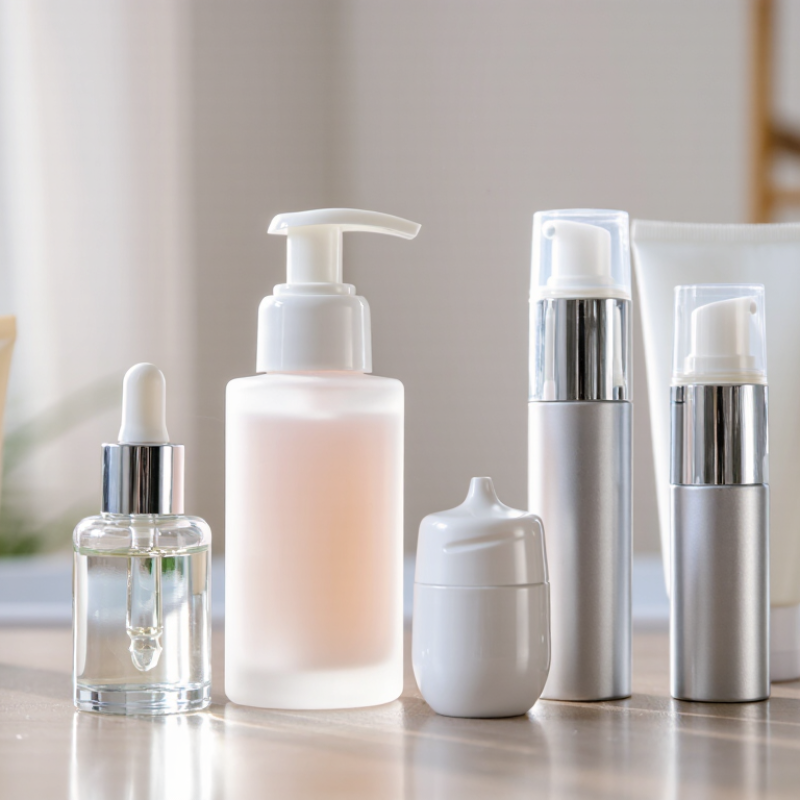
How Cosmetic Bottles Are Classified by Material, Dispensing Method, and Function
Cosmetic bottles can be classified by material, dispensing method, and intended use. Glass feels substantial and resists many product ingredients, but it is heavier and can break if dropped. Clear glass also reveals a formula’s color; amber or opaque packaging can help limit light exposure. Plastic options such as PET and HDPE are lighter and less fragile, though compatibility depends on the specific formula. Aluminum offers a sturdy, light-blocking shell, but its inner lining must suit the product. Materials are not interchangeable.
Dispensing design affects both use and product exposure. Pumps suit lotions and liquid cleansers, while droppers allow measured application of facial oils or serums. Fine-mist sprayers work well for watery products; squeeze bottles make thicker lotions easier to dispense. Fit matters. A pump that struggles with a dense formula can frustrate users, even when the bottle looks polished. Function also shapes the package: travel products often benefit from compact, leak-resistant closures, while daily-use products may need easy one-handed access. These categories overlap, and no single bottle type works best for every formula. In practice, testing the bottle with the actual product is a small step that is easy to overlook.
| Bottle Type | Common Material | Dispensing Method | Typical Products | Key Characteristics |
|---|---|---|---|---|
| Glass dropper bottle | Glass bottle with a glass pipette and elastomer bulb | Dropwise dispensing by squeezing the bulb | Facial oils, serums, and liquid treatments | Allows controlled application in small amounts. Glass offers a strong barrier to many ingredients, but the pipette assembly should be checked for formula compatibility. |
| Lotion pump bottle | PET, HDPE, PP, or glass bottle with a plastic pump | Manual pump delivers a measured portion | Lotions, liquid cleansers, and body-care products | Convenient for repeated use and helps limit direct contact with the product. The pump and formula viscosity must be compatible. |
| Airless pump bottle | Typically PP or other engineered plastic components | Pump draws product upward as an internal piston or pouch moves | Serums, creams, and some oxidation-sensitive formulas | Reduces air exposure and can dispense product with limited backflow. Actual protection depends on the complete package design and formula. |
| Fine-mist spray bottle | PET, HDPE, glass, or aluminum with a spray pump | Atomizing spray | Facial mists, toners, and hair sprays | Distributes thin liquids over a broad area. The nozzle is generally best suited to low-viscosity formulas without particles. |
| Trigger spray bottle | HDPE or PET with a trigger sprayer | Hand-operated trigger spray | Body sprays, hair-care liquids, and larger-format personal-care products | Offers a comfortable grip and a larger output per squeeze than many fine-mist pumps. Spray pattern and output vary by sprayer design. |
| Squeeze bottle | LDPE, HDPE, or flexible laminated material | Product is dispensed by squeezing through an orifice or flip-top cap | Shampoo, conditioner, body wash, and gels | Flexible walls make it easy to dispense thicker products. Cap and opening size affect flow and help control the amount dispensed. |
| Disc-top bottle | PET or HDPE with a PP closure | Press one side of the hinged top to open the dispensing orifice | Shampoo, lotion, and body wash | Provides one-handed access and a reusable closure. It is commonly paired with formulas that pour or squeeze through a relatively wide opening. |
| Roll-on bottle | Glass or plastic bottle with a plastic or metal roller ball | Product transfers through a rolling ball during application | Deodorant, fragrance oils, and targeted treatments | Applies liquid directly to a small area with limited dripping. Roller material and opening design should suit the formula. |
| Aluminum bottle | Aluminum, often with an internal coating | Usually pump, spray, or screw-cap dispensing | Hair-care products, body products, and travel-size toiletries | Lightweight and opaque, helping block light. A suitable internal coating and compatibility testing are important for liquid formulations. |
| Refillable bottle | Glass, PET, HDPE, or durable reusable plastic | Varies: pump, screw cap, or refill-pouch transfer | Hand wash, shampoo, lotion, and other frequently used products | Designed for repeated filling or use with a refill format. Durability, cleanability, closure fit, and clear refill instructions are important considerations. |