

2026 Top Freeze Dried Cod Suppliers How to Choose?
Choosing a reliable Freeze Dried Cod supplier in 2026 requires more than comparing prices or attractive product photos. Buyers must examine origin, processing controls, nutritional data, packaging quality, and delivery performance. A pale fillet is not automatically a good fillet.
Seafood quality consultant Dr. Helena Marwick explains, “The best dried fish begins with disciplined handling before the drying process starts.” Her observation is practical. Fresh cod should be traceable to a documented fishery, chilled quickly, and inspected before freeze drying. Supplier records should show moisture levels, protein content, allergens, batch numbers, and shelf-life testing. Clear evidence matters more than confident marketing language.
This guide explores how to compare leading Freeze Dried Cod suppliers for wholesale, retail, pet nutrition, and emergency food applications. It considers factory certifications, low-temperature processing, rehydration performance, odor, texture, and carton protection. A dependable product should rehydrate without turning excessively soft or producing a sharp, stale smell. Check the sample carefully. Rub a small piece between clean fingers, inspect the surface, and record the rehydrated weight.
Cost still matters, but the cheapest quotation may hide weak packaging or inconsistent cuts. That is where judgment becomes difficult. Even respected suppliers can vary between batches. Buyers should request recent laboratory reports, production samples, and realistic delivery terms before signing an agreement. No single checklist replaces direct verification. This article offers a practical starting point, while acknowledging one uncomfortable truth: supplier information is sometimes incomplete, and careful buyers must ask better questions.
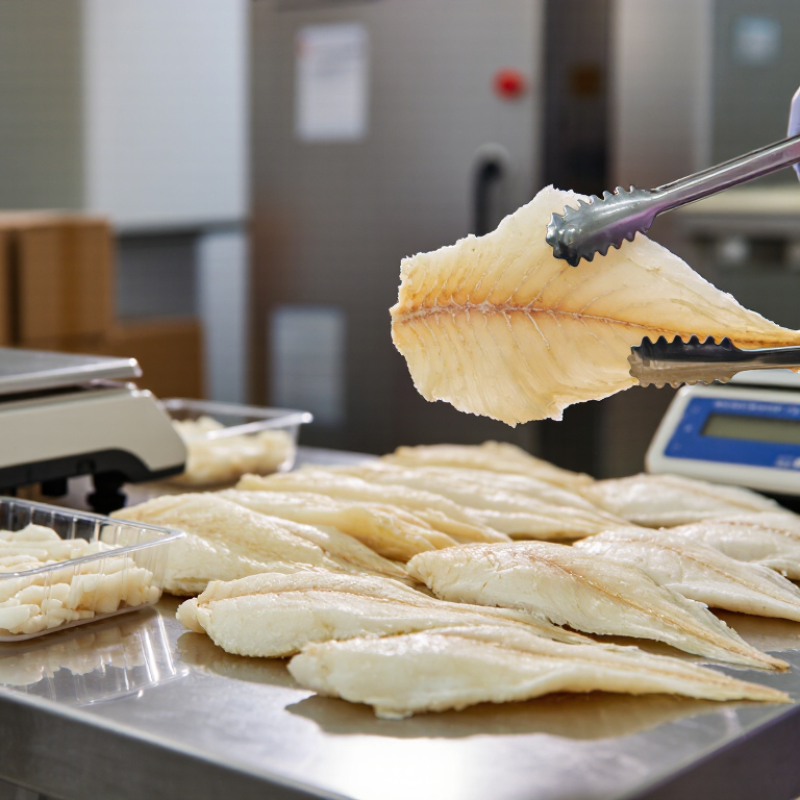
What Is Freeze-Dried Cod and Why Does Supplier Selection Matter?
What Is Freeze-Dried Cod and Why Does Supplier Selection Matter?
Freeze-dried cod is fish that has been frozen and placed in a vacuum. Ice leaves as vapor, while much of the fish’s shape, aroma, and nutrients remain. The result is light, porous, and shelf-stable when sealed correctly. It rehydrates quickly. That convenience hides technical risks. Residual moisture, oxygen exposure, or poor handling can affect texture and safety. Cod is also naturally delicate, so heat damage may reduce quality before sale.
Supplier selection matters because the process begins long before drying. A reliable supplier should document harvest or farm origin, batch identity, and processing dates. Ask for current laboratory results covering moisture, microbiological quality, contaminants, and allergens. The exact tests should match the product and destination market. Do not accept vague claims. Inspect packaging details too. A strong barrier pouch, oxygen control, and clear storage instructions help protect the product after production. Traceability should work both ways, from finished pouch back to raw cod and forward to customers.
In 2026, buyers should compare suppliers through samples, records, and repeatability, not photographs. Request a sample from a normal production lot, not a specially prepared showcase batch. Check color, odor, breakability, rehydration time, and consistency between pieces. Keep notes. Some suppliers may communicate quickly yet provide incomplete evidence. That is a warning, although not automatic proof of poor quality. Even experienced buyers can overvalue low prices. A cheaper carton may create waste if pieces arrive crushed or absorb moisture. No supplier is flawless. The better choice is one that can show control, admit limitations, and improve them.
2026 Top Freeze Dried Cod Suppliers How to Choose? - What Is Freeze-Dried Cod and Why Does Supplier Selection Matter?
Supplier-selection data table for evaluating freeze-dried cod products, documentation, safety, and commercial suitability
| Evaluation Dimension | What the Data Means | Practical Benchmark or Fact | Why It Matters | Evidence to Request |
|---|---|---|---|---|
| Product definition | Freeze-dried cod is cod that has been frozen and dehydrated under vacuum so ice changes directly from solid to vapor. | The process is also called lyophilization. It removes most water while generally retaining the food's shape and porous structure. | It helps buyers distinguish freeze-dried cod from air-dried, smoked, salted, or conventionally dehydrated cod. | Process description, product specification, and manufacturing flow chart. |
| Species identification | The scientific species and common trade name should be clearly stated. | Common Atlantic cod is Gadus morhua; Pacific cod is Gadus macrocephalus. These are different species and should not be treated as interchangeable without disclosure. | Species affects legal labeling, taste, texture, market positioning, and price. | Species declaration, catch documentation, and an identity or authenticity test when required. |
| Raw-material origin | Origin refers to the fishing area, farming source where applicable, landing location, or processing country. | Origin should be traceable by lot rather than presented only as a general country statement. | Traceability supports recall management, regulatory compliance, sustainability review, and customer transparency. | Lot code, harvest or catch area, landing date where available, processing-site information, and chain-of-custody records. |
| Moisture content | Moisture is the total water remaining in the finished product. | A buyer-defined target of approximately 2%–5% is commonly used for shelf-stable freeze-dried foods, but the specification must be validated for the product format. | Higher residual moisture can reduce crispness and storage stability; excessively dry product can increase breakage and processing loss. | Lot-specific certificate of analysis using a validated moisture method. |
| Water activity | Water activity measures how much water is available for microbial growth and chemical reactions; it is different from moisture percentage. | A water-activity target of ≤0.30 is a practical quality benchmark for many dry, shelf-stable products, subject to product validation. | Low water activity helps control microbial growth and supports a longer shelf life when packaging remains intact. | Water-activity result, test method, instrument calibration record, and storage-validation data. |
| Microbiological safety | Freeze-drying removes water but does not reliably sterilize food or eliminate all pathogens. | The supplier should operate a validated food-safety system and provide results for relevant pathogens and indicator organisms according to the destination-market requirements. | Contamination can occur before processing or after drying during handling and packaging. | Recent microbiological COA, sanitation program, environmental-monitoring summary, HACCP plan, and corrective-action records. |
| Chemical hazards | Fish may require monitoring for heavy metals, persistent contaminants, veterinary or agricultural residues where relevant, and other regulated hazards. | Limits depend on the importing country, product category, species, and intended consumer group. | Non-compliant results can cause border rejection, recalls, or restrictions on sale. | Accredited-laboratory reports for applicable heavy metals and contaminants, with sampling plans and regulatory references. |
| Allergen declaration | Fish is a major food allergen in many jurisdictions. | The label and technical documents should identify fish as an ingredient or allergen and disclose cross-contact controls. | Correct allergen information protects consumers and supports compliant labeling. | Ingredient statement, allergen policy, shared-line assessment, and label artwork for the destination market. |
| Additives and formulation | The finished product may be plain cod or may contain salt, seasonings, anti-caking agents, or other ingredients. | A “single-ingredient” claim should be supported by an ingredient list and formulation specification. | Formulation affects nutrition facts, allergen declarations, flavor, and permitted claims. | Full ingredient list, additive declarations, formulation sheet, and product label. |
| Nutrition information | Freeze-drying concentrates nutrients by removing water, so values per 100 g of dried product are not directly comparable with fresh cod. | Request nutrition values on both an “as sold” basis and, when useful, a rehydrated or serving basis. | This prevents misleading comparisons of protein, calories, sodium, and other nutrients. | Nutrition analysis, serving-size calculation, and documented rehydration ratio. |
| Texture and rehydration | The porous structure created during freeze-drying can allow the product to absorb water relatively quickly. | Compare rehydration time, water uptake, firmness, shrinkage, and sensory acceptance using the same test conditions. | Texture is critical for ready-to-eat snacks, emergency food, pet food, and ingredient applications. | Standardized rehydration test, sensory report, product photographs, and retained samples. |
| Packaging barrier | Dried fish readily absorbs moisture from humid air and can lose texture if the package is not adequately sealed. | Packaging should provide suitable moisture and oxygen protection and include a verified seal-integrity process. | Packaging performance can determine whether the product remains crisp and stable throughout distribution. | Packaging specification, barrier data, seal-strength or leak-test records, and transit simulation results. |
| Shelf-life validation | Shelf life is established through product and packaging studies rather than by drying alone. | The supplier should define storage temperature, humidity, package format, and acceptance criteria for the stated shelf life. | A shelf-life claim without test conditions is difficult to compare or verify. | Accelerated or real-time stability data, expiry rationale, and storage instructions. |
| Food-safety certification | Third-party certification can provide evidence that a facility follows a recognized food-safety management system. | Check the certificate scope, site address, issuing body, validity period, and product category; do not rely on a logo alone. | Certification scope may exclude the exact product or facility being quoted. | Valid certificate, latest audit status, audit summary, and evidence of regulatory registration where required. |
| Traceability and recall readiness | A traceability system links incoming fish, processing records, packaging materials, finished lots, and shipments. | The supplier should be able to identify affected lots quickly and conduct documented mock recalls. | Strong traceability reduces the scope and cost of a food-safety incident. | Lot-coding procedure, one-step-back/one-step-forward records, and mock-recall results. |
| Sustainability documentation | Sustainability claims should be linked to the actual fishery, species, fishing method, and chain of custody. | Request verifiable fishery or chain-of-custody documentation instead of accepting an unsupported “sustainable” statement. | Verified sourcing supports responsible procurement and reduces greenwashing risk. | Fishery certification or assessment documents, catch certificates, and supply-chain records. |
| Capacity and minimum order quantity | Capacity is the supplier's repeatable output, while minimum order quantity is the smallest commercial order accepted. | Compare monthly capacity, lead time, minimum order quantity, pilot-order options, and seasonal availability. | A supplier may meet a sample request but fail to support regular production volumes. | Production plan, capacity statement, lead-time history, minimum order terms, and supply-continuity plan. |
| Commercial comparison | The quoted price should be compared after accounting for yield, packaging, testing, freight, duties, and rehydration performance. | Use total landed cost per usable kilogram rather than purchase price alone. | A lower unit price may be offset by higher breakage, poor rehydration, short shelf life, or additional testing costs. | Incoterms, freight estimate, duty assumptions, payment terms, quality-claim procedure, and sample yield data. |