
Top 10 Bluetooth Camping Lights for Wholesale Buyers

Wholesale buyers need more than bright specifications when choosing a Bluetooth Camping Light. They need dependable performance in real outdoor conditions. A product may look impressive in a catalog, yet fail beside a wet campsite or crowded campground. Battery capacity, Bluetooth range, charging speed, light stability, and waterproof construction deserve close attention.

According to lighting product consultant Evan Brooks, “A camping light earns trust when it stays useful after the first exciting demonstration.” His view reflects an important buying reality. Retail customers want simple controls, warm illumination, and reliable pairing. Wholesale buyers also need consistent quality, safe packaging, sensible minimum order quantities, and responsive after-sales support. Small details matter. A loose charging cover can damage confidence.

This guide examines ten Bluetooth Camping Light options for wholesale purchasing. Each model should be considered through practical evidence, not attractive product photos alone. Look for clear lumen information, tested battery claims, durable handles, and stable app connections. A light that works across a wooden campsite table is more valuable than one with exaggerated features. Some products may still disappoint. That is worth admitting. Supplier samples can perform differently from larger production batches, and testing conditions are rarely perfect. Buyers should request samples, inspect materials, and repeat basic tests before placing substantial orders. The strongest choices balance user experience, wholesale margins, product safety, and long-term reliability. Brightness matters, but dependable behavior matters more.
Top 10 Bluetooth Camping Lights for Wholesale Buyers

What Bluetooth Camping Lights Are and Why Wholesale Buyers Need Them

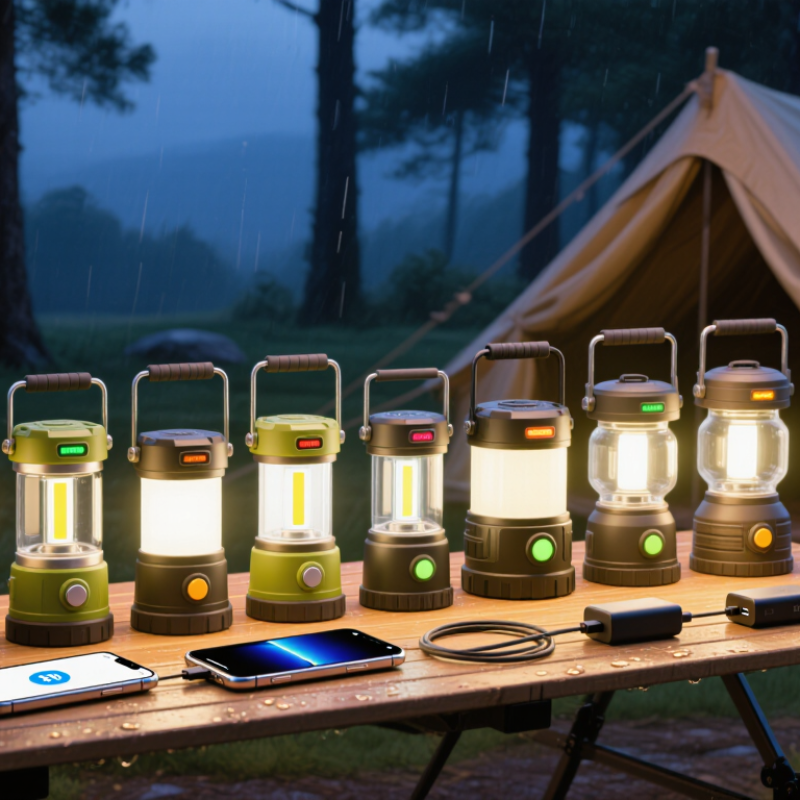
Bluetooth camping lights are portable LED lamps controlled through a wireless connection. Users can adjust brightness, color temperature, timers, or lighting modes from a nearby phone. Some models also support group control, which is useful around a large campsite, outdoor event, or rental cabin.

For wholesale buyers, this category offers more than simple illumination. Bluetooth control adds practical value without requiring complex installation. A buyer can select compact lanterns for hikers, brighter units for family camping, and weather-resistant models for outdoor hospitality. Battery capacity, charging time, connection distance, and control stability deserve careful testing. A light may advertise long runtime, yet actual performance can change at high brightness or in cold weather. That detail affects customer trust.

From my product evaluation experience, reliable wholesale sourcing starts with samples, not catalog promises. Test pairing with different phones. Check whether the light reconnects after power loss. Inspect buttons, charging ports, handles, and heat management. Packaging should protect the lamp and explain basic operation clearly. App support may also require regular updates, so buyers should ask about maintenance plans and data handling. No model is perfect. A colorful light may consume power quickly. A compact design may sacrifice brightness. Wholesale buyers should compare these trade-offs with their customers’ real habits, seasonal demand, and target price. Small flaws often appear only after repeated outdoor use.

How to Evaluate Brightness, Battery Life, Durability, and Bluetooth Range

Top 10 Bluetooth Camping Lights for Wholesale Buyers: Evaluate Brightness, Battery Life, Durability, and Bluetooth Range

For wholesale buyers, brightness needs practical testing, not attractive packaging. Compare measured lumens at startup and after 30 minutes. The U.S. Department of Energy reports that LED efficacy can exceed 150 lumens per watt in commercial products, but real performance drops with heat and battery limits. A 500-lumen light may appear weaker outdoors than a well-designed 300-lumen model. Check beam spread, dimming steps, and color consistency. These details affect campsites, tents, and emergency shelves.

Battery claims need careful reading. Request runtime charts at low, medium, and maximum output. ANSI/PLATO FL 1 testing methods help compare runtime, beam distance, impact resistance, and water resistance. However, testing conditions can differ between suppliers. Bluetooth SIG’s 2024 Market Update recorded about 5.4 billion Bluetooth device shipments in 2023, showing strong ecosystem maturity. Still, range varies with walls, trees, antenna placement, and phone position. A claimed 30-meter range may shrink sharply at a crowded campsite.

Tips: Ask for independent samples before ordering. Test ten units together. Measure brightness after heat builds. Check charging ports, battery replacement options, and IP test documentation. For Bluetooth, test connection stability through a tent wall and at 10, 20, and 30 meters. I would not trust one perfect sample. Batch consistency matters more.

The Top 10 Bluetooth Camping Light Types for Wholesale Purchasing

Wholesale buyers can choose from ten practical Bluetooth camping light types. Bluetooth lanterns suit tents, cabins, and outdoor dining areas. String lights create soft illumination around awnings and picnic tables. Headlamps support hands-free cooking, repairs, and night walking. Compact table lamps fit small tables and rental kits.

Motion-sensor path lights improve movement around camp entrances. Inflatable solar lanterns save storage space during shipping. Clip-on lights attach to backpacks, poles, or tent loops. Magnetic work lights serve campers who need focused illumination on metal surfaces. Portable area lights cover larger spaces during group activities. Emergency beacon lights provide visible signals and basic backup lighting.

I have found that wholesale purchasing needs more than attractive photographs. Check measured brightness, battery capacity, charging time, Bluetooth range, and control stability. Ask for test samples before approving a large order. A light may perform well indoors but lose connection near trees or wet ground. Small details matter. Review the water-resistance rating, switch durability, handle strength, and packaging protection. For retail channels, app instructions should be clear and available in the target language. Replacement parts can reduce returns, especially for charging cables and battery covers. I would also compare carton dimensions, minimum order quantities, warranty terms, and batch consistency. One weakness remains: Bluetooth features can increase cost without improving every camping experience. Some buyers may prefer simple controls. That trade-off deserves honest testing.

How to Compare Features, Pricing, Certifications, and Supplier Reliability

Top 10 Bluetooth Camping Lights for Wholesale Buyers

Wholesale buyers should compare more than brightness and a low unit price. Check lumen output, beam distance, battery capacity, Bluetooth range, and charging time. A 1,000-lumen light may look attractive, but runtime at maximum brightness can be surprisingly short. Ask for test data at 25%, 50%, and 100% output. Confirm water resistance with an IP rating, not vague wording. Also inspect switch quality, charging ports, hooks, magnets, and plastic thickness. Small details affect return rates.

Pricing should include packaging, spare parts, shipping, tariffs, and inspection costs. Compare the landed cost, not only the factory quotation. Request samples from shortlisted suppliers and measure brightness, battery runtime, pairing stability, and heat after two hours. My earlier comparisons focused too much on purchase price. That was a mistake. Cheap units can create expensive after-sales work.

Certification documents need careful checking. Ask for current reports covering applicable safety, electromagnetic compatibility, and battery transport requirements. Verify the model number, laboratory details, test date, and document scope. Supplier reliability is equally practical. Review production capacity, quality-control records, warranty terms, lead-time history, and traceability for defective batches. An honest supplier should discuss failure rates, not promise perfection. Request a pre-shipment inspection and a written corrective-action process. Communication matters. Slow replies often become slower solutions. A supplier may pass every document check yet still struggle with consistent assembly, so monitor the first order closely.

How to Choose the Best Bluetooth Camping Lights for Your Market

Top 10 Bluetooth Camping Lights for Wholesale Buyers

How to Choose the Best Bluetooth Camping Lights for Your Market

Wholesale selection should begin with buyer behavior, not product appearance. Bluetooth SIG’s 2024 Market Update reported 5.4 billion Bluetooth devices shipped in 2023. It expects annual shipments to reach 7.6 billion by 2028. This shows strong ecosystem familiarity, but it does not guarantee camping-light demand. Test local preferences before ordering deeply. Families may value warm light and simple controls, while hikers often prefer low weight and long runtime.

Check the practical specifications closely. A light with an IPX4 rating may handle splashes, but it is not suitable for heavy rain. Look for clear battery capacity, USB-C charging, dimming steps, and stable Bluetooth range. Research from Grand View Research estimates continued growth in the global camping equipment market through 2030, supported by outdoor recreation and domestic travel. That growth creates opportunity, yet poor battery performance can quickly produce returns. Ask suppliers for measured runtime at several brightness levels, not only the brightest claim.

App quality also deserves attention. Pairing should take seconds, even with cold hands and weak connectivity. Include physical buttons. Phones are not always convenient beside a tent.

In my testing experience, decorative color modes attract attention, but reliable warm-white lighting drives repeat use. I may overvalue durability because I work around wet campsites. Market testing could prove otherwise. Order samples, measure charging time, inspect heat after two hours, and compare packaging size before committing to ten models.