

How to Choose Modern Living Room Sets for Global Buyers?
Choosing Modern Living Room Sets for a global home involves more than matching a sofa with a coffee table. Buyers must balance comfort, room size, construction quality, cultural preferences, and delivery requirements. A beautiful set can still fail if its 280-centimeter sofa cannot pass through a narrow doorway. Measure the room, elevator, entrance, and stairwell before comparing designs.
Experienced furniture buyers often examine frame materials, joinery, cushion density, fabric performance, and warranty terms. Solid wood frames may offer lasting support, while engineered panels can reduce weight and cost. Neither option is automatically better. The right choice depends on climate, household use, maintenance habits, and budget. Check fabric samples in natural light. Test the seat depth. Look beneath the cushions.
Global purchasing also requires careful attention to product dimensions, packaging, assembly instructions, electrical components, and local import requirements. Reliable suppliers should provide clear specifications, realistic lead times, protective packaging details, and responsive after-sales support. Certifications may matter for certain materials or markets, but buyers should verify their relevance instead of trusting vague labels.
Comfort matters most.
Still, no checklist is perfect. A fabric that performs well in a dry showroom may feel different in a humid coastal home. Color can change under warm lighting. This guide explores practical ways to compare Modern Living Room Sets, identify trustworthy suppliers, and avoid costly assumptions. It encourages informed decisions, while recognizing that personal taste and everyday living can challenge even the most careful plan.
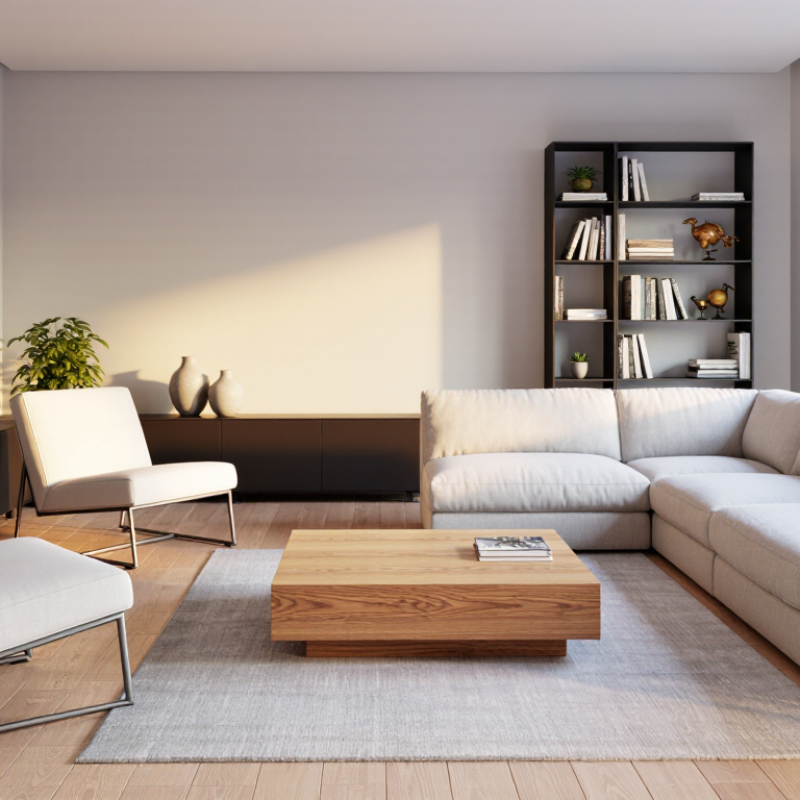
Measure Room Flow: Keep Main Walkways at Least 91 cm Wide (ADA)
When choosing modern living room sets, measure movement before selecting style. The 2010 ADA Standards identify 36 inches, or about 91 cm, as the minimum clear width for an accessible route. Treat this as a practical benchmark, not a decorative suggestion. Measure between the sofa, coffee table, walls, and storage units. Include the real furniture depth, not the catalog estimate.
A clear 91 cm walkway helps wheelchair users, older adults, children, and guests carrying trays. It also reduces awkward collisions during daily use. AARP’s 2021 Home and Community Preferences Survey found that 77% of adults aged 50 and older want to remain in their homes. Flexible circulation therefore supports long-term residential planning. For international buyers, local accessibility rules may differ, so consult a qualified designer before final installation.
Place the sofa first, then map routes with painter’s tape. Keep the main path from the entrance to windows, balconies, and adjacent rooms visibly open. Allow extra space near recliners and hinged doors. A 91 cm path can disappear quickly when cushions shift or side tables move. I have seen attractive layouts fail after one large ottoman arrives. That mistake is easy to make. Recheck the room with doors open, lights dimmed, and people walking through it. The room may still need more space.
Set Comfort Targets: Choose 40–45 cm Seat Height and 50–60 cm Depth
For global buyers, comfort starts with measurable targets, not visual styling. Aim for a seat height of 40–45 cm and a usable seat depth of 50–60 cm. The U.S. Army Anthropometric Survey, ANSUR II (2012), records adult popliteal-height differences of more than 10 cm across lower and upper percentiles. One fixed size cannot suit every household. Shorter users may need a lower seat, while taller users often need deeper support.
Test the sofa with both feet flat on the floor. Your knees should stay close to a right angle, without pressure behind them. A 52 cm seat may become 47 cm after cushion compression. Measure the compressed surface, not only the frame. BIFMA X5.4-2020 evaluates lounge seating for stability, strength, and durability, but it does not promise universal comfort dimensions. That limitation matters.
For international projects, request drawings showing seat height, seat depth, cushion thickness, and back angle. A firm 45 cm seat can feel easier to rise from than a soft 42 cm seat. Yet excessive firmness may reduce relaxed lounging. I have found this trade-off easy to underestimate. Use removable cushions when possible, especially for mixed-height households. Depth can also be reduced with lumbar pillows, although they may crowd the seating area. Comfort is personal, and the “ideal” measurement still needs a real sitting test.
Screen Upholstery: Specify 20,000+ Martindale Cycles for Frequent Use
How to Choose Modern Living Room Sets for Global Buyers?
For living rooms used daily, screen upholstery should handle repeated sitting, movement, and occasional spills. Specify at least 20,000 Martindale cycles for frequent household use. This rating measures abrasion resistance, not total fabric quality. A high score cannot prevent fading, pilling, or seam damage. Request the complete test report from the supplier. Check whether the result follows a recognized testing method. A fabric sample beside your television can reveal glare, color shifts, and texture changes.
Tips: Ask for 20,000+ cycles, colorfastness data, cleaning instructions, and spare fabric. Test the fabric under your room’s lighting. Dark, tightly woven upholstery often hides small marks better, but it may show dust. Light fabrics can make compact rooms feel larger. Choose removable covers when maintenance access matters. Confirm the cushion foam density and frame construction too. Upholstery alone does not define durability.
In my sourcing experience, buyers sometimes focus on appearance and forget daily behavior. Children may climb onto the sofa. Guests may sit in the same place for hours. A realistic choice considers climate, cleaning habits, and local repair access. Breathable fabrics can feel more comfortable in humid regions, while dense weaves may resist surface wear better. Still, no specification replaces careful installation and routine care. I once underestimated sunlight near a large window. The fabric performed well, but its color changed faster than expected. That mistake deserves attention.
How to Choose Modern Living Room Sets for Global Buyers? - Screen Upholstery: Specify 20,000+ Martindale Cycles for Frequent Use
| Living Room Set Type | Typical Configuration | Recommended Room Size | Screen Upholstery Requirement | Recommended Martindale Rating | Suitable Use Level | Key Construction Considerations | Maintenance Guidance |
|---|---|---|---|---|---|---|---|
| Compact Apartment Set | 2-seat sofa, compact lounge chair, nesting coffee tables | 12–18 m² | Woven polyester or polyester-blend screen fabric with a tight, even surface | 20,000–30,000 cycles | Regular daily use in apartments and small homes | Choose narrow arms, raised legs, and modular pieces to improve circulation and access | Vacuum weekly with a soft upholstery attachment; clean spills promptly according to the fabric care code |
| Family Lounge Set | 3-seat sofa, chaise or loveseat, one or two occasional chairs | 18–28 m² | Solution-dyed polyester or durable polyester blend with stain-resistant finishing where appropriate | 30,000–40,000 cycles | Frequent use by adults, children, and guests | Use high-resilience foam, reinforced seat decking, durable suspension, and removable cushion covers where possible | Rotate loose cushions regularly; avoid excessive moisture and follow the manufacturer’s cleaning code |
| Open-Plan Modular Set | Configurable corner sofa, ottoman, movable side table | 25–40 m² | Heavy-duty woven upholstery with consistent color across replaceable modules | 40,000+ cycles | High-frequency household use and flexible entertaining areas | Confirm module connectors, sectional alignment, access dimensions, and replacement-cover availability | Clean between modules and under cushions; keep the upholstery away from prolonged direct sunlight |
| Hospitality-Inspired Lounge Set | Two sofas or one sofa with multiple lounge chairs and side tables | 25–45 m² | Commercial-grade screen fabric with abrasion, seam, and colorfastness documentation | 40,000–60,000 cycles | Frequent entertaining, rental properties, and shared living spaces | Prioritize robust frame joints, cleanable surfaces, replaceable feet, and stable seat construction | Use a professional upholstery cleaner when required; test any cleaning product on a concealed area first |
| Pet-Friendly Living Room Set | Performance sofa, washable accent chair, storage ottoman | 18–30 m² | Dense, low-texture woven fabric that reduces snagging and makes hair removal easier | 30,000–50,000 cycles | Homes with cats, dogs, or other active pets | Avoid loose bouclé or open-loop textures when snag resistance is a priority; select firmly attached covers | Remove hair frequently with a vacuum or upholstery tool; address moisture and stains immediately |
| Premium Minimalist Set | Low-profile sofa, sculptural lounge chair, slim console or coffee table | 20–35 m² | Fine woven polyester blend or durable wool-blend screen upholstery with a uniform visual texture | 20,000–30,000 cycles | Moderate daily use where appearance is a major priority | Check cushion alignment, seam precision, frame proportions, and the visual consistency of fabric panels | Use gentle vacuuming; prevent sharp objects, rough clothing hardware, and direct heat from contacting the fabric |
| Convertible Guest Lounge Set | Sofa bed, nesting tables, compact accent chair | 14–24 m² | Durable woven fabric with good seam stability and a surface suitable for repeated folding or movement | 25,000–35,000 cycles | Daily seating with occasional overnight sleeping use | Verify mattress thickness, opening clearance, operating mechanism, and load distribution before purchase | Operate the mechanism without dragging; vacuum fold areas and allow the mattress to air after use |
Martindale figures indicate abrasion resistance measured by a standardized rubbing test. Actual service life also depends on fabric construction, cleaning practices, sunlight exposure, furniture design, and intensity of use.
Verify Seating Safety Under EN 12520 Domestic Strength Requirements
How to Choose Modern Living Room Sets for Global Buyers?
Verify Seating Safety Under EN 12520 Domestic Strength Requirements
A modern sofa should look refined, but its hidden frame must withstand repeated household use. EN 12520:2015 sets safety and strength requirements for domestic seating. It evaluates seat, back, armrest, and stability performance through controlled laboratory testing. Test loads are not simply a user’s body weight. They simulate pressure, leaning, and repeated movement. Ask suppliers for the complete test report, not only a passing statement.
Details matter. Check whether the tested configuration matches the offered sofa, including cushions, legs, reclining parts, and corner modules. A modular set may pass as one arrangement and behave differently after reconfiguration. Inspect joint gaps, loose fasteners, sharp edges, and unstable feet during sample approval. Small movement can become annoying failure.
The European Commission’s 2023 Safety Gate report recorded 3,412 product alerts across consumer categories. That figure shows why documented verification matters in international purchasing. However, an EN 12520 report does not replace shipment inspection or correct installation. I have seen attractive samples develop frame noise after transport. Testing may not reveal every real-home weakness. Buyers should request production samples, loading records, and batch traceability. The documentation can still be incomplete. That deserves a second question.
Calculate Landed Costs: The 2022 Global Furniture Market Reached $516.7B
How to Choose Modern Living Room Sets for Global Buyers?
The global furniture market reached approximately US$516.7 billion in 2022, according to Statista’s market estimate. That scale creates opportunity, but price comparisons can mislead. A modern living room set priced at US$900 may cost far more after shipping and import charges.
Calculate landed cost before selecting a design. Use this formula: product price, packaging, inland transport, ocean freight, insurance, customs duty, port fees, taxes, and delivery. A 40-foot container may hold fewer cartons when sofas use thick protective foam. Measure carton volume, not only product dimensions. Check the correct HS code with a customs professional. Rates differ by destination and material.
Country risk matters too. The World Bank’s Logistics Performance Index scores customs, infrastructure, and delivery timeliness on a 1-to-5 scale. Lower scores can signal delays and extra storage fees.
UN Comtrade data can help compare furniture import values and trading patterns by HS code. Still, public data is not a final quotation.
My first landed-cost worksheet missed destination handling fees. It looked accurate. It was not. Request a current freight offer, duty confirmation, and written delivery scope. Keep currency assumptions visible. Exchange rates can quietly change the result. A modular sofa may reduce freight volume, but more parts can increase assembly complaints. Buyers should test one shipment before committing to a full container.