Top 10 Centrifugal Air Blower Benefits and Applications?
Centrifugal Air Blower technology is pivotal in various industrial applications. According to the latest market research, the global centrifugal blower market is projected to reach USD 12.5 billion by 2025. This growth reflects their efficiency and versatility. Industries utilize these blowers for ventilation, cooling, and material handling.
The advantages of Centrifugal Air Blowers include energy efficiency, low maintenance, and quiet operation. For instance, they can reduce energy consumption by up to 30% compared to traditional blowers. This efficiency translates into cost savings for businesses. Yet, not all models are created equal. Some may require extensive recalibration over time, leading to downtime.
Understanding the applications can refine business operations. They are essential in wastewater treatment, HVAC systems, and pneumatic conveying. However, improper use can lead to performance issues. Therefore, choosing the right centrifugal air blower is critical. It impacts not just functionality but overall system reliability.
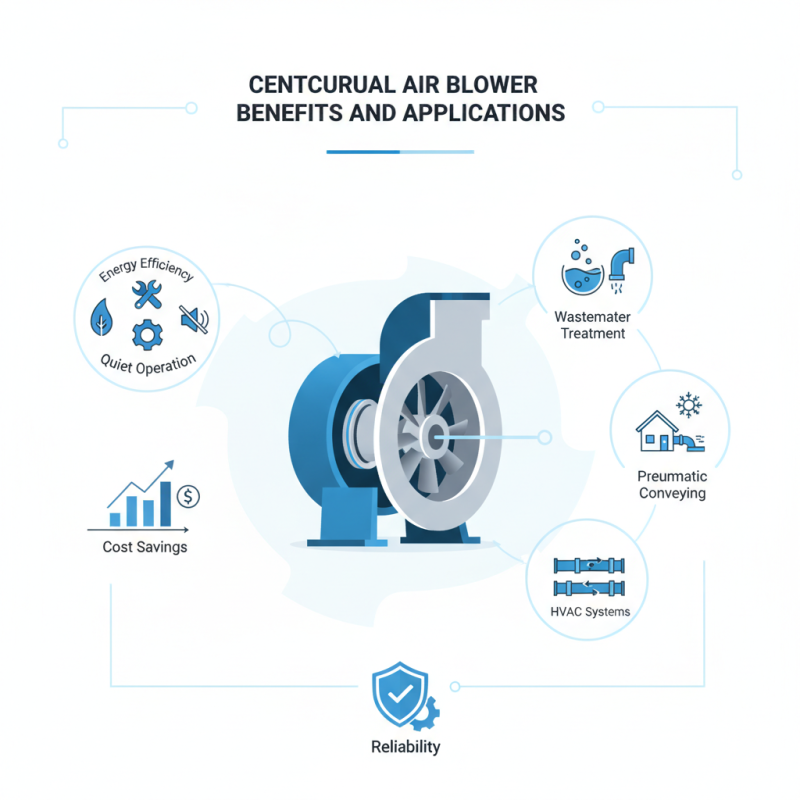
Overview of Centrifugal Air Blowers and Their Mechanism
Centrifugal air blowers are pivotal in various industrial applications. Their mechanism relies on the conversion of rotational energy into kinetic energy. With an impeller inside a casing, these blowers draw air in and accelerate it outward. This process creates a high-velocity airflow, suitable for multiple uses in sectors like HVAC, wastewater treatment, and material handling.
According to industry reports, centrifugal blowers can achieve efficiencies over 80%. This efficiency makes them a popular choice in system designs requiring reliable performance. They can operate continuously, providing stable airflow in demanding environments. However, maintenance is critical. Neglecting regular checks can lead to inefficiencies and unexpected downtimes, underscoring the importance of proactive care.
**Tip:** Regular inspection of the impeller and bearings can prevent significant failures. Small changes in performance may be signs of larger issues. Also, ensure the air intake is free from obstructions. This step optimizes air quality and flow rates. Investing time in upkeep pays off in long-term savings.
Top 10 Benefits and Applications of Centrifugal Air Blowers
Key Benefits of Using Centrifugal Air Blowers
Centrifugal air blowers are essential in various industries. They provide powerful airflow, making them ideal for ventilation and pneumatic conveying. Their robust design allows for efficient performance over extended periods. Such blowers are popular in manufacturing, agriculture, and dust control applications.
Key benefits include high efficiency. These blowers can move large volumes of air with minimal energy consumption. This can lead to significant cost savings in operational expenses. They are also durable, often designed to withstand harsh conditions, which enhances their lifespan.
When using centrifugal air blowers, consider proper installation. Misalignment can lead to vibration and premature wear. Regular maintenance is crucial. Inspection of components such as bearings can prevent costly downtime. Be mindful of the air quality in your environment. Contaminants can affect blower performance and longevity.
Choosing the right blower for your needs is vital. Evaluate the airflow requirements of your application. Not all blowers are created equal, and performance can vary widely. Ensure you have clear specifications in mind to avoid common pitfalls. Thoughtful selection will lead to better efficiency and reliability.
Common Applications of Centrifugal Air Blowers in Various Industries
Centrifugal air blowers serve vital roles across many industries. In manufacturing, they provide essential ventilation. They remove dust and ensure a safe environment for workers. In the food processing sector, they help maintain air quality, preventing contamination. Consistent airflow is crucial. In textile manufacturing, these blowers assist with the drying process. Wet fabrics need swift drying to maintain quality.
In wastewater treatment facilities, centrifugal air blowers support aeration tanks. They supply air to promote the growth of beneficial bacteria. This process is vital for breaking down organic waste. It highlights the blower’s role in environmental protection. In agriculture, blowers improve air circulation in greenhouses. Proper airflow regulates temperature and humidity. This directly impacts plant health.
These applications illustrate the versatility of centrifugal air blowers. However, they aren't without challenges. Over time, wear and tear can reduce efficiency. Regular maintenance is essential to address this issue. Not all systems are designed for heavy use. Understanding specific operational needs is crucial for optimal function.
Comparison of Centrifugal Air Blowers with Other Blower Types
Centrifugal air blowers offer distinct advantages over other blower types, like positive displacement and regenerative blowers. One key metric is efficiency. According to a recent industry report, centrifugal blowers can achieve efficiencies of over 80% in specific applications. This is significant compared to positive displacement blowers, which typically operate between 60% and 75% efficiency. This enhanced performance leads to lower energy costs for businesses with demanding air movement needs.
Another important comparison lies in maintenance requirements. Centrifugal blowers generally enjoy longer life spans and reduced maintenance needs. Regular maintenance can be a chore for positive displacement blowers due to their complex mechanisms. In contrast, centrifugal blowers often require simpler inspections and fewer adjustments. However, this can vary with usage intensity, which means operators must consider their specific applications carefully.
Noise levels are also a critical consideration. Centrifugal blowers produce a more consistent sound profile, often quieter than regenerative types, which can create higher-pitched noise. Data show that noise levels can determine workplace comfort and safety. While centrifugal blowers are not completely silent, their operational noise is often more tolerable, impacting workplace conditions positively. In exploring these differences, industries must ask: Are there scenarios where these advantages might not hold?
Future Trends and Innovations in Centrifugal Air Blower Technology
The future of centrifugal air blower technology is on an exciting trajectory. Innovations focus on energy efficiency and smarter operation. Enhanced controls and automation will enable better performance monitoring. This means real-time data analysis for improved operational efficiency. Manufacturers are working on integrating IoT technologies for smarter airflow management. These advancements promise reduced energy consumption and lower operational costs.
Another trend involves the development of compact, lightweight blowers. Designs are becoming more streamlined without sacrificing performance. This is crucial for industries needing space-efficient solutions. Additionally, research is underway to explore new materials that can withstand higher temperatures and corrosive environments. End-users desire reliable blowers that require less maintenance and have longer lifespans. The challenge lies in balancing durability with cost-effectiveness.
Despite these advancements, some hurdles remain. Not all facilities will have the budget for the latest technologies. Employing cutting-edge solutions may require a learning curve for maintenance teams. Moreover, compatibility with existing systems can be an issue. Organizations must weigh the benefits against potential disruptions during upgrades. As technology evolves, users must remain adaptable to capitalize on emerging trends.